 Loans
Loans
USDA Home Loan Explained: Direct vs Guaranteed, and Who Qualifies
The name "USDA loan" makes people picture farmland and tractors. In practice, it covers a lot of ordinary suburban streets, and it's one of only two zero-down mortgage programs available anywhere in the market.
This article covers the real difference between the two USDA programs, the rural boundary rule that catches more towns than expected, the income calculation that trips up multi-generational households specifically, and a refinance option most existing USDA borrowers don't know exists.
1. What a USDA Home Loan Actually Is
Despite the name, this isn't a loan for farmland. USDA Rural Development's own page on the Guaranteed Loan Program_LINK backs a zero-down mortgage available in a surprising number of ordinary suburban towns, not just open countryside.
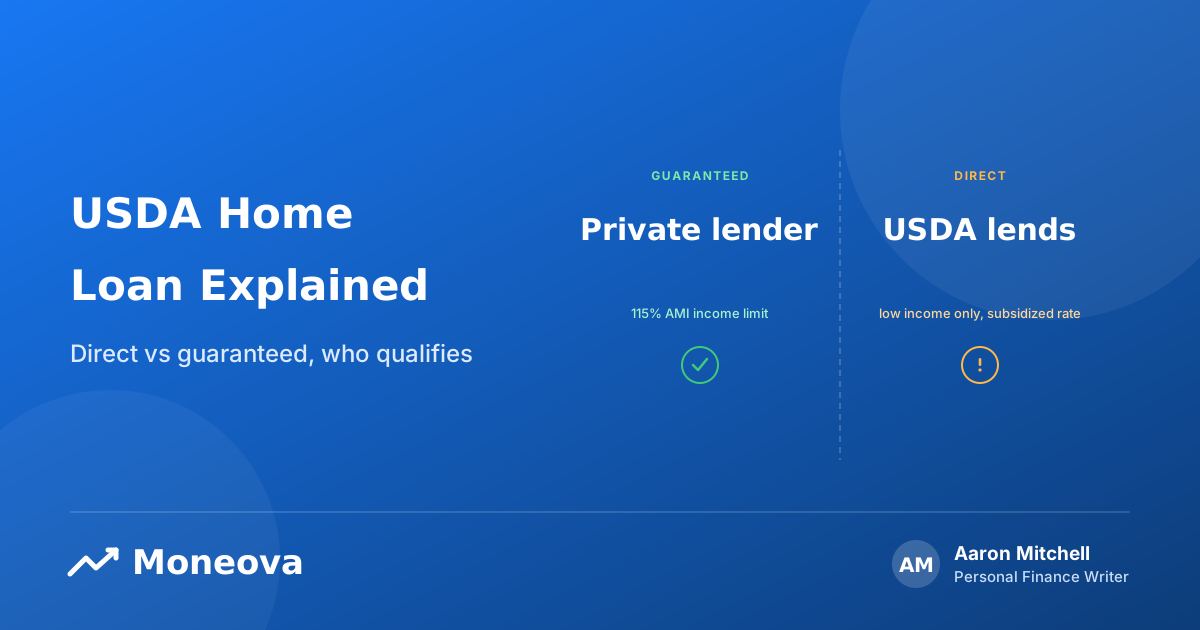
There are two distinct programs, and most people only ever hear about one of them. The usda guaranteed loan works through a private lender, the same way a VA or FHA loan does, with USDA backing the loan behind the scenes.
The usda direct loan is different: USDA Rural Development's own page on the Direct Loan Program_LINK confirms the USDA itself is the lender, reserved for low and very-low income borrowers, sometimes with a subsidized rate through payment assistance.
Roughly 97% of US land area technically qualifies for USDA financing. That number is misleading on its own, since most of that land is unpopulated. What actually matters is that many real, populated suburbs, not just remote countryside, fall inside the eligible boundary.
2. USDA Loan Eligibility: The Rural Rule Almost Nobody Checks Correctly
This is the mistake that costs people the most time when qualifying for usda loan approval. USDA eligibility is checked at the exact street address, not by county, city, or zip code.
The general threshold is a population under 35,000, with some nuance at the edges: areas up to 20,000 can still qualify if they sit outside a metropolitan statistical area and show a real lack of affordable mortgage credit. A property can sit a few blocks from an ineligible city boundary and still qualify, while a similar-looking street on the other side does not.
Running a usda property eligibility check is step one. Check the official USDA property and income eligibility map_LINK for the specific address before touring a home, not after you've fallen for it. Eligibility maps get updated periodically based on census data, so a property that qualified two years ago isn't guaranteed to qualify today.
3. Check Your USDA Income Eligibility
This usda loan eligibility check works out your income limit. Enter your county's area median income, your household size, and your total household income, including everyone 18 or older living in the home.
Enter your county's area median income, household size, and total household income.
Illustrative only, not a lending decision. Assumes the Guaranteed program's 115% AMI standard. Sources read 23 August 2026.
4. USDA Income Limits: The Rule Most Guides Explain Badly
The Guaranteed program uses a specific formula: your local area median income, multiplied by 1.15. That's the entire calculation for a household of one to four people.
Here's the part that trips people up. USDA counts every adult's income in the household, not just the people on the loan. An adult child living at home earning $30,000 counts toward the total, even though they're not a borrower and never will be.
| Income tier | 2026 limit, 1-4 person household | 2026 limit, 5-8 person household |
|---|---|---|
| Very low income (Direct program) | $35,550 | $46,950 |
| Low income (Direct program) | $56,900 | $75,150 |
| Moderate income (Guaranteed program) | $122,800 | $162,100 |
Real deductions can lower your countable income if you're close to the line: $480 per dependent under 18, documented child care costs, and medical expenses for an elderly or disabled household member above a threshold all reduce the figure used for eligibility.
Take a household in a county with a $97,750 limit, earning $99,190 gross, $1,440 over. With three kids under 18, the $480-per-dependent deduction removes exactly $1,440 from the calculation, landing the adjusted figure precisely at the limit.
A household that looks slightly over on paper sometimes isn't, once these are applied correctly. Our debt-to-income ratio guide covers the separate calculation that determines your actual monthly payment approval, once income eligibility is settled.
5. USDA Fees vs FHA: A Real Dollar Comparison
USDA loans skip PMI in the traditional sense, replacing it with a guarantee fee structure that's genuinely cheaper than FHA's over time.
| USDA | FHA | |
|---|---|---|
| Upfront fee | 1.0% of loan amount | 1.75% of loan amount |
| Annual fee | 0.35% of balance | 0.55% of balance |
| Duration | Life of loan, drops as balance falls | Life of loan in most cases |
| Monthly cost, $250,000 loan | ~$73 | ~$115 |
The upfront fee is designed to be financed, not paid in cash. USDA allows financing up to 101% of the appraised value specifically so the 1% fee fits inside the loan without needing extra cash at closing.
6. USDA Property Types: A Real Difference From VA Loans
USDA property rules overlap with VA and FHA in places, but one distinction genuinely surprises people who've researched other government-backed loans first.
- Usda manufactured home loans require the home to be new. Unlike a VA loan, which allows any manufactured home built after June 1976, USDA requires the home to be new, never previously titled or installed anywhere else. A well-maintained used manufactured home that would qualify for VA financing generally will not qualify here.
- No in-ground pools, no income-producing features. USDA's modest housing standard rules out homes with luxury features considered excessive for the area, a restriction VA and FHA don't apply the same way.
- Barndominiums can qualify, if permanently affixed to a foundation, comparable to other homes in the area, and built to meet safety standards. Finding a lender willing to underwrite one takes more legwork than a standard purchase.
- New construction is financeable through a usda rural development construction loan, a single-close loan covering land, construction costs, and the permanent mortgage in one closing instead of two separate loans.
- The usda section 504 home repair program is a separate thing entirely, not a purchase loan at all. It funds repairs on a home you already own, up to $40,000, sometimes structured as a grant rather than a loan for qualifying low-income senior homeowners.
7. USDA Credit Score and DTI: The Real Numbers
Usda mortgage eligibility on credit is often misunderstood. USDA sets no official minimum credit score, which some people mistake for meaning credit doesn't matter. It matters, just through a different mechanism.
A 640 score is the practical line. At or above it, your loan can run through GUS, USDA's automated underwriting system, for faster approval. Below 640, manual underwriting is possible but far fewer lenders offer it, and the documentation bar rises.
Debt-to-income runs on two numbers: 29% for housing costs alone, 41% for total debt including the new mortgage. Both are guidelines, not hard walls. A credit score above 680, several months of cash reserves, or a strong on-time payment history can support approval above either line.
8. The USDA Refinance Most Homeowners Don't Know Exists
A usda mortgage refinance can be surprisingly simple. If you already have a USDA loan, the streamlined-assist refinance is one of the easiest refinances available anywhere in the mortgage market.
No new appraisal. No credit review. No income re-verification. You need a 12-month on-time payment history and a rate reduction, and that's essentially the whole requirement. Most other refinance types force you to fully requalify as if you were a new borrower; this one deliberately doesn't.
9. The USDA Appraisal Does Two Jobs at Once
A USDA appraisal isn't just a value check the way a conventional appraisal is. It also confirms the home meets USDA's minimum property standards, structural soundness, safe water supply, functional electrical and plumbing systems, adequate heating.
If the appraiser flags something below standard, the repair generally has to happen before closing, not after. This catches sellers off guard more often than buyers, especially on older homes in eligible rural areas where deferred maintenance is common. Budget time for this step, and get a separate home inspection too; the appraisal isn't a substitute for one.
Citizenship matters here too, though it's easy to overlook. Borrowers need to be a US citizen, US non-citizen national, or a qualified alien with permanent resident status. Non-permanent residents don't qualify for either USDA program, regardless of income or credit.
10. The USDA Timeline Nobody Warns You About
USDA loans take longer than conventional or even FHA loans, and the reason is a step those other programs simply don't have.
After your lender finishes their own underwriting, the file still goes to a USDA state office for a conditional commitment, the government's actual guarantee. That extra review typically adds anywhere from a few days to a couple of weeks, depending on how busy that state office is at the time.
Plan on 45 to 60 days from accepted offer to closing, sometimes longer during peak season. A seller expecting a 30-day conventional close may need a clear explanation of why your timeline looks different, and a real estate agent who's handled USDA deals before is worth seeking out specifically for this reason.
11. Who a USDA Loan Actually Makes Sense For
A USDA loan is a genuinely strong deal for a specific kind of buyer, not a default choice for everyone shopping outside a major city.
- You have little or no cash for a down payment. This is the entire point of the program. Zero down, combined with cheaper insurance than FHA, makes USDA hard to beat when cash is the constraint, not income.
- Your household income sits comfortably under the local limit. A household earning right at the 115% AMI line has less room for a future raise or a new working adult moving in before eligibility becomes a problem down the line, though existing loans aren't affected once closed.
- You're not in a rush. The extra state-office review step means USDA rarely wins a bidding war against a cash buyer or a conventional offer that can close in three weeks.
It makes less sense if your income is near or over the limit, if the property you want sits just outside the eligible boundary, or if speed to closing matters more than saving on a down payment.
12. A Real USDA Loan Example: Same County, Different Households
The Reyes household and the Chen household are both looking at homes in the same eligible county, where the area median income is $85,000.
| Reyes household | Chen household | |
|---|---|---|
| Household size | 3 (2 borrowers, 1 child) | 4 (2 borrowers, 1 adult parent, 1 child) |
| Borrowers' combined income | $88,000 | $82,000 |
| Other household income | $0 | $34,000 (parent's pension) |
| Total household income | $88,000 | $116,000 |
| 115% AMI limit (1-4 person) | $97,750 | $97,750 |
| Eligible? | Yes | No, over by $18,250 |
The Chens actually earn less on their own loan application than the Reyeses do. What disqualifies them is a household member who isn't borrowing anything at all. This is exactly the rule that catches multi-generational households off guard.
Checking total household income before falling for a specific house matters. If your household ends up over the limit or the property falls outside an eligible area, our FHA vs conventional loan guide covers the two most common alternatives.
13. Frequently Asked Questions
14. Final Thoughts
The two things that trip up most USDA applicants aren't complicated once you know to check them: the exact address, not the general area, determines property eligibility, and every adult's income in the household counts toward the limit, not just the people signing the mortgage.
Get both of those right before you fall in love with a specific house, and a USDA loan is a genuinely strong deal, cheaper insurance than FHA, no down payment at all, for a much wider range of addresses than the name suggests.
This article is for general information only and is not a lending decision or financial advice. Rules and figures described here reflect USDA Rural Development, read 23 August 2026. Income limits, property eligibility boundaries, and fee schedules update periodically and vary by county; confirm current figures for your specific address and household with a USDA-approved lender before making an offer. Figures in examples are illustrative, not guarantees of any specific outcome.Disclaimer.