 Insurance
Dental Insurance Explained: Coverage and the Waiting Period Trap
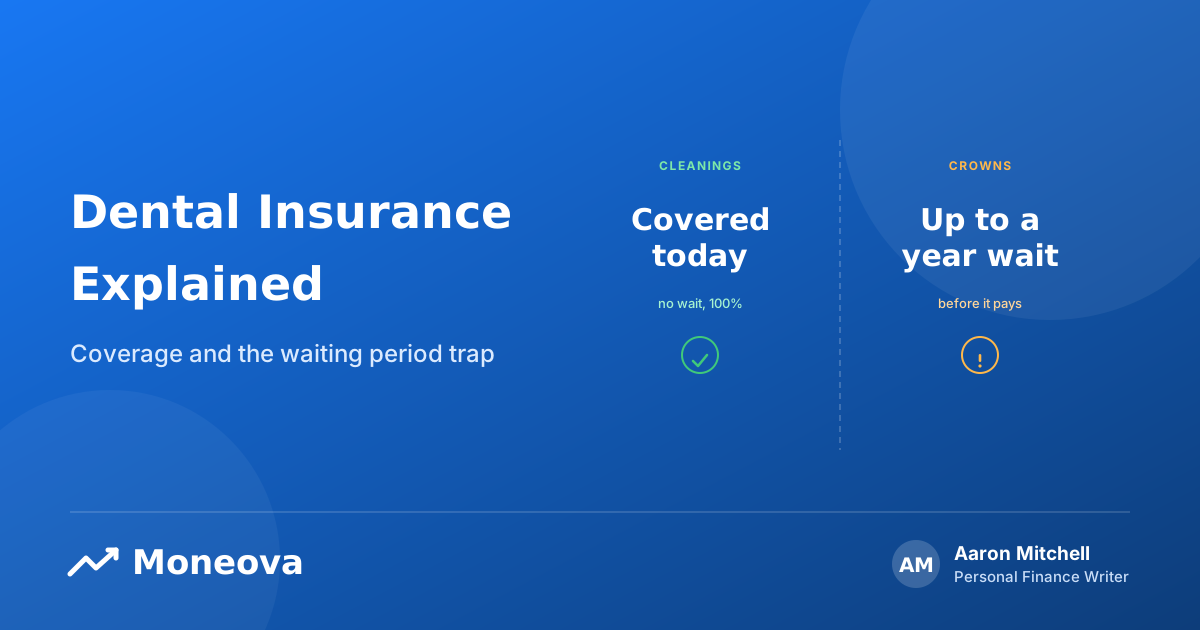
Somewhere in most dental plans is a sentence that matters more than the premium: coverage for major work does not start on day one. Cleanings and exams are usually covered right away. Crowns, root canals and dentures often are not, sometimes for a full year.
This is not a hidden trick. It is a standard feature of nearly every dental policy sold in the US, and it exists for a reason insurers rarely explain clearly: without it, people would buy coverage the week before an expensive procedure and cancel the month after.
What this article covers: the 100/80/50 structure almost every plan uses, the waiting periods that catch people off guard and the legitimate way to skip them, PPO versus HMO dental, and how coverage changes sharply depending on your age, including a gap at 65 that surprises a lot of people.
1. What Dental Insurance Actually Covers
Dental insurance plans are not one single product with one set of rules, and dental insurance providers structure their coverage differently from carrier to carrier. It splits routine care and expensive care into different tiers, pays each tier at a different rate, and often makes you wait months before it will pay for the tier you actually need. Understanding that structure matters more than comparing premiums.
Almost every dental PPO (Preferred Provider Organization) plan sold in the US follows the same coinsurance pattern, commonly called 100/80/50.
| Tier | What it includes | Typical coverage |
|---|---|---|
| Preventive | Cleanings, exams, routine X-rays, fluoride | 100% |
| Basic | Fillings, simple extractions, periodontal treatment | 80% |
| Major | Crowns, bridges, dentures, root canals, oral surgery | 50% |
Read that table carefully, because the numbers are not automatic. Coverage applies only after you meet a deductible, usually $25 to $50, and only up to an annual maximum, usually $1,000 to $2,000. A single crown can cost $1,200 to $1,800, which means one major procedure can use up most or all of a year's benefit on its own.
- Preventive care is nearly always free after the deductible. Insurers cover it fully because catching problems early is cheaper than treating them later.
- Basic and major care come with real out-of-pocket cost, even when covered. An 80% or 50% coinsurance rate still leaves you paying the rest.
- The annual maximum is a hard ceiling. Once you hit it, you pay 100% of everything else for the rest of the plan year, even preventive care in some structures.
- Orthodontics is usually separate, often with its own lifetime maximum rather than an annual one, and frequently excluded from basic plans entirely.
2. The Dental Insurance Waiting Period Trap
This is the part that catches people off guard more than anything else in dental insurance, and it is why so many first claims get denied.
A waiting period is the length of time after your coverage starts before the plan will pay for a given category of service. You keep paying the premium the entire time. The clock starts on your plan's effective date, not the day you signed up.
| Service category | Typical waiting period |
|---|---|
| Preventive (cleanings, exams, X-rays) | None, usually covered immediately |
| Basic (fillings, simple extractions) | 3 to 6 months |
| Major (crowns, bridges, dentures, root canals) | 6 to 12 months |
| Orthodontics (braces, clear aligners) | 12 to 24 months, if covered at all |
Picture the situation this creates. You enrol in January because your dentist told you six months ago that you need a crown. You read the policy and discover a 12-month waiting period on major services. You will pay premiums every month for a full year while receiving zero coverage for the one thing you signed up for.
2.1 The clause marketed as "no waiting period"
Some plans advertise no waiting period, and the claim is technically true, but it is not the same as full coverage from day one. These plans commonly use graded, or incentive, benefits instead: coverage starts low and rises each year you stay enrolled. A typical structure pays around 25% of basic services in year one, rising to 50% by years two or three and 80% by year four. Major work often starts near 10-25% in year one.
That is still better than a flat 12-month wait paying nothing, but it is a long way from the 80/50 structure most people picture when they buy dental insurance. Read the benefit schedule, not just the marketing line, before assuming "no waiting period" means immediate full coverage.
2.2 How to skip the wait entirely
There is a legitimate way around most waiting periods: prior continuous coverage. If you can show you were enrolled in a comparable dental plan for 12 months or more, with no gap exceeding 63 days, many carriers will waive the waiting period on your new plan.
This matters most when changing jobs or moving from an employer plan to an individual one. Ask your previous insurer for a certificate of creditable coverage and provide it to the new carrier at enrolment, before you need the waiver rather than after a claim is denied.
Employer group plans, especially larger ones, frequently waive waiting periods entirely as a standard feature, which is one of several reasons a workplace dental plan is often better value than an individual one even when the premium looks similar.
Timing your enrolment date can also work in your favour if a major procedure is not urgent but is coming eventually. Individual plans bought during ACA open enrolment, typically November through mid-January, start coverage on 1 January or the first of the following month. Enrolling in November for a 1 January start means a 12-month major-services wait ends 31 December the same year, effectively giving you a full calendar year's head start compared with enrolling mid-year for the same treatment timeline.
3. PPO vs HMO Dental: Two Different Ways to Pay
For dental insurance for individuals shopping outside an employer, individual dental insurance plans split into two structurally different types, and the difference matters more than most people realise when picking a plan.
| Dental PPO | Dental HMO (DHMO) | |
|---|---|---|
| How you pay | Coinsurance: a percentage of the fee (roughly 100/80/50) | Fixed copays from a published schedule |
| Choice of dentist | Any dentist, more for in-network | Assigned to one dentist, referral needed for specialists |
| Annual maximum | Yes, usually $1,000-2,000 | Usually none |
| Waiting periods | Common | Often none |
| Premium | Higher | Lower |
| How the dentist is paid | Per procedure performed | A flat monthly amount per patient, whether they visit or not |
The last row explains something people rarely think about. A DHMO dentist is paid the same amount whether you show up or not, which means the profit comes from doing less chair-intensive work. Complex cases are often referred out. A PPO dentist is paid per procedure, which removes that particular incentive but introduces the annual maximum and the waiting periods instead.
Neither structure is universally better. If your dental needs are limited to cleanings and the occasional filling, a DHMO's lower premium, lack of waiting periods and lack of annual maximum can make it the stronger choice. If you know a crown, implant or orthodontic work is coming, a PPO's flexibility to choose your own specialist usually outweighs the higher premium and the wait.
4. Work Out Whether Your Dental Insurance Covers It
The premium is the least useful number for comparing dental plans. Put in your expected treatment and this estimates what you would actually pay under the 100/80/50 structure, checks it against a typical annual maximum, and flags whether the waiting period would apply.
Enter your plan's numbers and the procedure you need. This estimates what you would pay under the standard 100/80/50 structure and flags whether a waiting period would apply.
Illustrative only, not insurance advice. Assumes a standard 100/80/50 PPO structure, a $1,500 annual maximum, and typical waiting periods of 0 months preventive, 3-6 months basic and 6-12 months major. Your actual plan terms may differ; check your Summary of Benefits. Sources read 11 August 2026.
5. How Dental Insurance Changes by Age
Dental insurance is not one system with one set of rules across a person's life. It splits sharply by age, and the gap at one end is large enough that it deserves its own explanation.
5.1 Children: dental coverage is mandatory
For anyone under 21 enrolled in Medicaid or CHIP (Children's Health Insurance Program), dental coverage is not optional. Federal law requires it under the EPSDT benefit (Early and Periodic Screening, Diagnostic, and Treatment), and no state can limit a child to emergency-only dental care. Coverage includes routine exams, cleanings, fillings, and any medically necessary treatment a screening uncovers, including orthodontics where medically justified rather than cosmetic.
This is the one part of the dental insurance system with no state-to-state variation and no optional element. If a child is enrolled in Medicaid or CHIP, dental coverage exists by law.
5.2 Working-age adults: employer coverage and individual plans
Most working adults get dental coverage through an employer group plan, which typically comes with better rates, often waives waiting periods, and usually follows the 100/80/50 structure described above. Adults without employer coverage buy individual plans directly, where waiting periods, annual maximums and narrower networks are the norm rather than the exception.
For adults on Medicaid, coverage is optional and set state by state. Some states offer comprehensive adult dental benefits with an annual cap around $1,000-1,800; others cover emergency treatment only, such as pain relief and infection control; a small number offer no adult dental benefit at all. Unlike the children's benefit, this varies enormously depending on where you live.
5.3 Seniors: the gap almost nobody expects at 65
This is the largest and least understood age-related gap in the entire system. Original Medicare does not cover routine dental care. The exclusion is written into federal law under Section 1862(a)(12) of the Social Security Act, and it covers cleanings, fillings, extractions, dentures and implants: essentially all of the dental care most people actually need.
Three realistic paths exist for someone on Medicare who wants dental coverage:
- Medicare Advantage with a dental benefit. The large majority of Medicare Advantage plans now include some dental coverage, but the scope varies enormously. Some cover only preventive cleanings; others include crowns and dentures. Annual maximums of $1,000-1,500 are common and get used up quickly by a single major procedure. Check the plan's specific dental schedule rather than assuming "dental included" means comprehensive coverage.
- A standalone dental plan bought separately, alongside Original Medicare or a Medigap policy. Medigap itself does not cover dental; it only fills cost-sharing gaps in what Medicare already covers, and dental is outside that. Standalone plans generally run $20 to over $100 a month depending on the coverage level.
- Medicaid dental, for those who qualify. If you are dual-eligible for Medicare and Medicaid, adult Medicaid dental benefits may apply, subject to the same state-by-state variation described above.
The practical takeaway: if you are approaching 65 and currently have employer dental coverage, that coverage typically ends when the employment does. Plan for the replacement before the gap opens, not after a dental problem forces the decision.
5.4 Federal employees: a separate system entirely
Federal and US Postal Service employees, retirees and their eligible family members have access to a completely separate programme called FEDVIP (Federal Employees Dental and Vision Insurance Program), administered by OPM (the Office of Personnel Management) through an enrolment portal called BENEFEDS.
- A choice of about a dozen dental carriers, rather than a single plan.
- Enrolment happens during Open Season, which runs each November into December, or within 60 days of first becoming eligible.
- Retirees remain eligible provided they retired with an immediate annuity, which makes FEDVIP one of the more reliable dental options available after federal employment ends, unlike the private-sector gap described above.
- Enrolment is separate from general health benefits. Being eligible for FEHB (Federal Employees Health Benefits) is the qualifying condition, but you do not need to actually be enrolled in it to sign up for FEDVIP.
The OPM overview of the Federal Employees Dental and Vision Insurance Program and OPM eligibility rules for FEDVIP cover the full eligibility rules, and the OPM enrollment windows for FEDVIP sets out the enrolment windows precisely.
6. What Dental Insurance Typically Does Not Cover
Reading the exclusions matters as much as reading what is included, because the gaps are where people get an unexpected bill. If dental coverage came through an employer and that job has just ended, our guide to COBRA health insurance covers whether the dental portion can continue.
- Cosmetic procedures. Teeth whitening, veneers purely for appearance, and similar treatments are excluded from nearly every plan.
- Pre-existing conditions on some individual plans. Unlike medical insurance, dental insurance is not subject to the ACA (Affordable Care Act) ban on pre-existing condition exclusions, so a dental plan can legally limit or deny coverage for a condition you already had when you enrolled. A missing tooth clause is the most common form of this: if a tooth was already missing before your policy started, replacement of that specific tooth may be excluded even though the plan otherwise covers dentures or bridges.
- Adult orthodontics, on many basic plans. Dental insurance for braces is frequently excluded or capped separately for adults, even when the same plan covers children, and not every plan marketed as dental insurance that covers orthodontics actually includes adult coverage.
- Anything past the annual maximum. Once the cap is reached, you are responsible for 100% of remaining costs for the rest of the plan year, regardless of the procedure.
- Implants, on many older or basic plans, though this is changing; check specifically, because implant coverage where it exists is usually paid at the major-care rate and subject to the same annual maximum and waiting period as other major work.
Because dental expenses often fall outside insurance limits, they are also commonly paid from a tax-advantaged account. Most dental treatment qualifies as an IRS-recognised medical expense, which means funds from an HSA (Health Savings Account) can cover the gap between what insurance pays and what the procedure costs. The IRS Publication 502 on medical and dental expenses sets out which dental expenses qualify, and our guide to how a health savings account works covers the account itself in full.
7. A Real Example: Same Dental Insurance, Two Different Bills
Numbers make the structure concrete. Sara and Tom each need a $1,600 crown. Both have dental PPO insurance with an 80/50 structure, a $50 deductible and a $1,500 annual maximum, but their situations differ in one respect each.
| Sara | Tom | |
|---|---|---|
| Months since enrolling when the crown is needed | 14 months | 4 months |
| Waiting period on major services (12 months) | Cleared | Not yet cleared |
| Deductible | $50 | $50 |
| Insurance pays (50% of remainder, major tier) | $775 | $0 |
| Sara/Tom pays | $825 | $1,600 |
| Difference | $775, decided entirely by two months of enrolment timing | |
Same procedure, same plan, same annual maximum untouched in both cases. The only variable is whether the 12-month clock on major services had finished running. Tom's crown cost him the full price because he needed it eight months before his coverage was ready to pay for it.
This is why timing elective major work, where the choice exists, is worth planning around the waiting period rather than around the dentist's first available appointment.
8. How to Choose a Dental Insurance Plan
- Start with what you actually need, not the premium. If a crown or orthodontic work is already on the horizon, the waiting period and the annual maximum matter more than the monthly cost.
- Ask about prior coverage waivers before enrolling. If you have had continuous dental coverage for 12+ months, request the waiting period be waived rather than discovering the wait applies after a denied claim.
- Read the annual maximum, not just the premium. A $1,000 cap and a $2,000 cap can carry similar premiums but very different real-world value if you need major work.
- Check whether orthodontics is included at all, and whether it has its own separate lifetime maximum.
- Decide between PPO and DHMO based on your actual dental history, not the lower headline premium alone.
- If you are on Medicare or approaching 65, plan the dental gap deliberately. Compare a Medicare Advantage dental benefit against a standalone plan well before employer coverage ends.
- If you are a federal employee or retiree, compare FEDVIP carriers during Open Season rather than defaulting to the same plan each year; premiums and benefits change annually.
Dental discount plans are a different product entirely, not insurance: you pay an annual fee for discounted rates at a network of dentists, with no waiting period and no annual maximum, but no coinsurance either. For personal dental insurance bought directly rather than through an employer, compare the discount-plan alternative before assuming a full policy is the better value for light users. The USA.gov guide to health insurance options is a useful starting point for comparing health and dental coverage options more broadly.
9. Dental Insurance Mistakes That Cost Money
Most dental insurance problems come from timing and paperwork rather than the coverage itself.
- Scheduling major work before the waiting period clears. Check the effective date and the wait for that tier before booking, not after.
- Not requesting a waiver for prior coverage. If you had 12+ months of continuous dental coverage, ask for the waiver at enrolment. Carriers do not always volunteer it.
- Assuming "no waiting period" means full coverage from day one. Graded benefit plans often pay very little in year one despite the marketing.
- Ignoring the annual maximum when planning multiple procedures. A crown alone can use most of a $1,500 cap; a second procedure the same year may get little or nothing.
- Letting employer dental coverage lapse without a replacement plan. This matters most around retirement, when Medicare will not fill the gap.
- Not checking the missing-tooth clause on individual plans. A tooth missing before the policy started may not be covered for replacement even under an otherwise comprehensive plan.
- Forgetting dental expenses often qualify for HSA (Health Savings Account) funds. The gap between what insurance pays and the full cost is frequently an eligible HSA expense.
Most of these are avoidable with one phone call to the carrier before treatment, rather than an appeal after a denied claim.
Frequently Asked Questions
Final Thoughts
The single number that decides more about a dental plan than the premium does is the waiting period on major services. It is the reason a plan that looks affordable can leave you paying full price for exactly the procedure you bought insurance for.
Before enrolling in anything, ask two questions. First, does prior continuous coverage waive the wait, and do you have the paperwork to prove it. Second, if you are within a few years of 65, what happens to your dental coverage when your employer plan ends, because Medicare will not fill that gap on its own.
This article is for general information only and is not insurance advice. Dental plan structures, waiting periods, coinsurance rates and annual maximums vary by carrier, plan and state; the figures described here reflect typical 2026 market norms, read 11 August 2026, and are not a quote for any specific plan. Medicaid, CHIP and Medicare dental rules cited are federal baselines; Medicaid adult dental benefits vary significantly by state. FEDVIP rules apply only to eligible federal employees, retirees and their families. Dollar figures are illustrative examples, not quotes. Confirm your plan's actual terms in its Summary of Benefits, or speak with a licensed insurance professional.Disclaimer.